Article Info

Article Info
Description
Nitrous oxide (N2O) is a reliable inhalation anesthetic that provides effective sedation and analgesia, as well as being safe when used correctly. However, medical professionals who frequently administer it should be aware of the possibility of long-term exposure.
This article will examine the research and potential hazards of N2O, commonly known as laughing gas and the correlated use in dental settings.
Retrospective Studies
In 1967, Vaisman1, a Russian scientist reported that female and male anesthesiologists experienced reproductive issues at a much higher rate than the general population. Vaisman concluded these problems were caused by occupational hazards of being chronically exposed to anesthetic gases. Given that N2O was a common denominator in the anesthetic applications studied, it was implied as the causative agent.
In the 1970s and 80s, Ellis N. Cohen, MD, a Stanford University School of Medicine anesthesiologist whose research revolutionized how operating rooms are now designed, published articles2 anesthetic health hazards.
One of Cohen's studies surveyed over 50,000 dentists and dental assistants exposed to trace anesthetics. The results suggested that long-term exposure to anesthetic gases could lead to general health problems and reproductive difficulty for those exposed to trace anesthetics. The results indicated that long-term exposure to anesthetic gases could be associated with an increase in general health problems and reproductive difficulty.
Although research studies have continued to reveal the potential harmful effects of chronic exposure to N2O, it is important to note that these studies have been retrospective. As a result, there may be biases in the study design that could affect the accuracy of the results. Due to these flaws, it cannot be definitively established whether there is a causal relationship between an individual's exposure to N2O/O2 and reproductive issues.
Dental Setting Exposure
The National Institute for Occupational Safety and Health (NIOSH) conducted an evaluation of the scavenging potential of equipment used in operating rooms and outpatient settings in 1977. They found that achieving 25 ppm of N2O was possible in the operating room, but not in a dental operatory.
As a result, NIOSH established a maximum exposure limit of 50 ppm for personnel in a dental setting. Although this limit has not been strictly enforced by the Occupational Safety and Health Administration (OSHA), it is still the recommended standard.
Despite the negative publicity N2O has received, other studies in the literature have claimed that there are no harmful health effects associated with chronic exposure to N2O, especially in low concentrations.
Further Evaluation Indicates Exposure Duration Factor
In 1995, the University of Colorado conducted a worldwide literature search on the topic of biohazards associated with N2O use. Their literature review indicated that there was no scientific basis for the previously established threshold levels for the hospital operating room or the dental setting. This led to a meeting of interested parties representing dentistry, government, and manufacturing, which resulted in a formal position statement stating that a maximum N2O exposure limit in parts per million has not been determined.
There is evidence that chronic exposure to high levels of N2O affects reproduction, but to date, no evidence has been found that a direct causal relationship exists between reproductive health and scavenged low levels of N2O.
Sweeney et al.3 conducted a study that showed the first indication of any biological effect from N2O was observed at a chronic exposure level of 1800 ppm. Experts agree that 400 ppm is a reasonable exposure level, which is significantly below the established biological threshold. (Sweeney et al.)
N2O interferes with the enzyme methionine synthase, which is responsible for recycling homocysteine back to methionine. Methionine synthase is crucial in the metabolic pathways of vitamin B12 and folic acid and in the production of DNA. Prolonged exposure to N2O can lead to megaloblastic hematopoiesis and leucopenia.
It was hypothesized that fetal development might be impaired due to this interference. In animal studies, pregnant rats exposed to approximately 60% N2O for 24 hours experienced miscarriage and other fetal abnormalities.
Chronic exposure to N2O can result in neurologic disorders such as myeloneuropathy. While symptoms such as sensory and proprioception impairment may be permanent, they are usually temporary with slow recovery.
Recommendations
It’s recommended to postpone the use of N2O sedation during pregnancy due to the high demands for folic acid during organogenesis (first trimester) and the link between high levels of homocysteine and congenital disabilities. For pregnant women working in environments where N2O is used, it is important to know the levels of N2O exposure and to use all recommended trace gas scavenging methods.
Depending on the individual and the situation, dental professionals should decide whether to avoid the office setting and any N2O exposure during the first trimester.
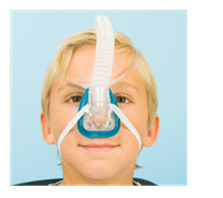
Discussions are ongoing regarding the safety of nitrous oxide. However, it appears that the gas is safe when administered in low therapeutic doses for short periods. To maintain safe levels of nitrous oxide in a dental office, there are several measures that can be taken.
In Conclusion
There is currently no direct evidence that shows chronic low-level exposure to N2O causes any biological effects. The maximum safe concentration of N2O isn’t fully understood, but measures should be taken to reduce the level of trace N2O that professionals are exposed to. Furthermore, it’s important for dental practitioners to be cautious when their health and coworkers' wellbeing are at stake.
Dental professionals who use N2O/O2 sedation should be required to continue their education, and they should have evidence of proper training with state-of-the-art equipment and N2O administration techniques.
Additional Information
Author Bio
Genni Burkhart
With over 14 years as a published journalist, editor, and writer, Genni Burkhart's career has spanned politics, healthcare, law, business finance, technology, and news. She resides in Northern Colorado, where she works as the editor-in-chief of the Incisor at DOCS Education.
Disclosures
Commercial Disclosure
This free Dental Learning presentation is made possible through the continued support of DOCS Education. Genni Burkhart is a consultant and/or speaker for the following companies and/or organizations: Dental Learning, DOCS Education. Genni Burkhart may receive an honorarium as compensation from the CE Supporter of this presentation and/or from Dental Learning for the time involved in preparing and delivering this online presentation.
Dental Learning is an approved AGD PACE Provider and California State Dental Board Provider of dental continuing education. Dental Learning strives to deliver balanced, objective and clinically relevant information grounded on scientific research. Lecturers who are invited to deliver Dental Learning CE webinars are advised to substantiate their claims with research-supported data and to disclose all commitments to, or relationships with, any commercial entity within the dental industry. In many cases, lecturers are sponsored by a dental manufacturing company, which provides them with support in the form of honorarium and/or dental products and equipment in order to help with clinical presentations. Prior to each live CE webinar, lecturers are made aware of the importance of delivering their presentations without commercial bias, and where appropriate, to mention a variety of different product choices that may be relevant to the subject matter of the lecture, for the educational benefit of the participant.
Disclaimer
Dental Learning LLC sites offer content that include opinions, techniques, recommendations, etc. from a variety of writers and speakers that are not necessarily endorsed by Dental Learning LLC, its associates and sponsored Dental Affiliates. Viewers are responsible for verifying the validity, accuracy and relevance of all content before implementing any techniques, products or recommendations into their clinical setting. Viewers understand that Dental Learning LLC, its associates, writers, speakers and sponsored Dental Learning Affiliates are not in any way responsible or liable for any adverse events that may occur (i.e., in a clinical setting or anywhere) based on any information disseminated from Dental Learning LLC sites, including all Dental Learning sites.
The copyrights and other rights to the slides and video contained in a webinar posted on this website are owned by the speaker, Dental Learning LLC, and/or the sponsor company and/or its subsidiaries worldwide. Viewers are only authorized to view the content of the webinar (live and archive) at this Website and are not permitted to screen capture, record and/or download any content displayed in this webinar. You may not make any part of this Website available as part of another web site whether by hyperlink framing on the Internet or otherwise.
By signing up for this webinar/event or podcast, I agree to receive electronic messages, which may include educational events, promotions, product information and service offers, from Dental Learning or any of its course supporters. I understand that I may unsubscribe at any time using the opt-out link provided in every message.
Dental Learning is an approved AGD PACE and California State Dental Board Provider of dental continuing education.
Questions regarding our Conditions of Usage, Privacy Policy, or other policy related material can be directed to our support staff by clicking on the "Support" link or you can email us at: support@dentallearning.net.