Course Info
Course Info
Educational Objectives
Learning Objectives
After completing this webinar, participants will be able to:
Define terminal dentition and recognize its diagnostic criteria and clinical significance in treatment planning.
Compare full-arch treatment modalities available for patients with terminal dentition, including surgical and prosthetic considerations.
Differentiate FP1 and FP3 treatment options by analyzing esthetic, surgical, and restorative implications.
Apply digital technologies and interdisciplinary workflows to plan FP1 full-arch rehabilitation.
Implement a step-by-step algorithm for FP1 surgical execution and restorative sequencing to achieve predictable outcomes
Abstract
Treatment planning for complex full-arch implant cases requires interdisciplinary coordination, meticulous data collection, and precise execution. Digital dentistry enhances this process by generating a virtual patient clone, enabling accurate diagnosis and prosthetic-driven implant placement. While FP3 restorations remain the conventional choice—replacing teeth along with hard and soft tissues—they can be aggressive and biologically demanding. FP1 restorations, in contrast, focus on re-establishing natural white esthetics with a minimally invasive approach. This presentation highlights digital workflows that facilitate FP1 outcomes, demonstrating how guided planning and execution can expand treatment possibilities for patients with terminal dentition.
Terminal dentition, defined as severely compromised teeth that require extractions, presents a complex diagnostic dilemma: overtreatment risks unnecessary morbidity, while undertreatment can compromise long-term outcomes. Fixed implant modalities have provided life-changing solutions, with the FP3 approach serving as the most common treatment option. While FP3 restorations offer ease of planning and greater tolerance for surgical or restorative error, they often require significant hard-tissue reduction to create restorative space—an inherently invasive strategy.
Recent advances in digital dentistry, facially driven planning, and biomimetic restorative concepts have opened the door for more conservative FP1 approaches. These restorations, designed to preserve soft and hard tissue while delivering superior esthetics, reflect a paradigm shift in full-arch rehabilitation. FP1 success hinges on meticulous interdisciplinary coordination and the integration of digital tools such as guided surgery, virtual design, and 3D-printed mock-ups.
Additional Information
Author Bio
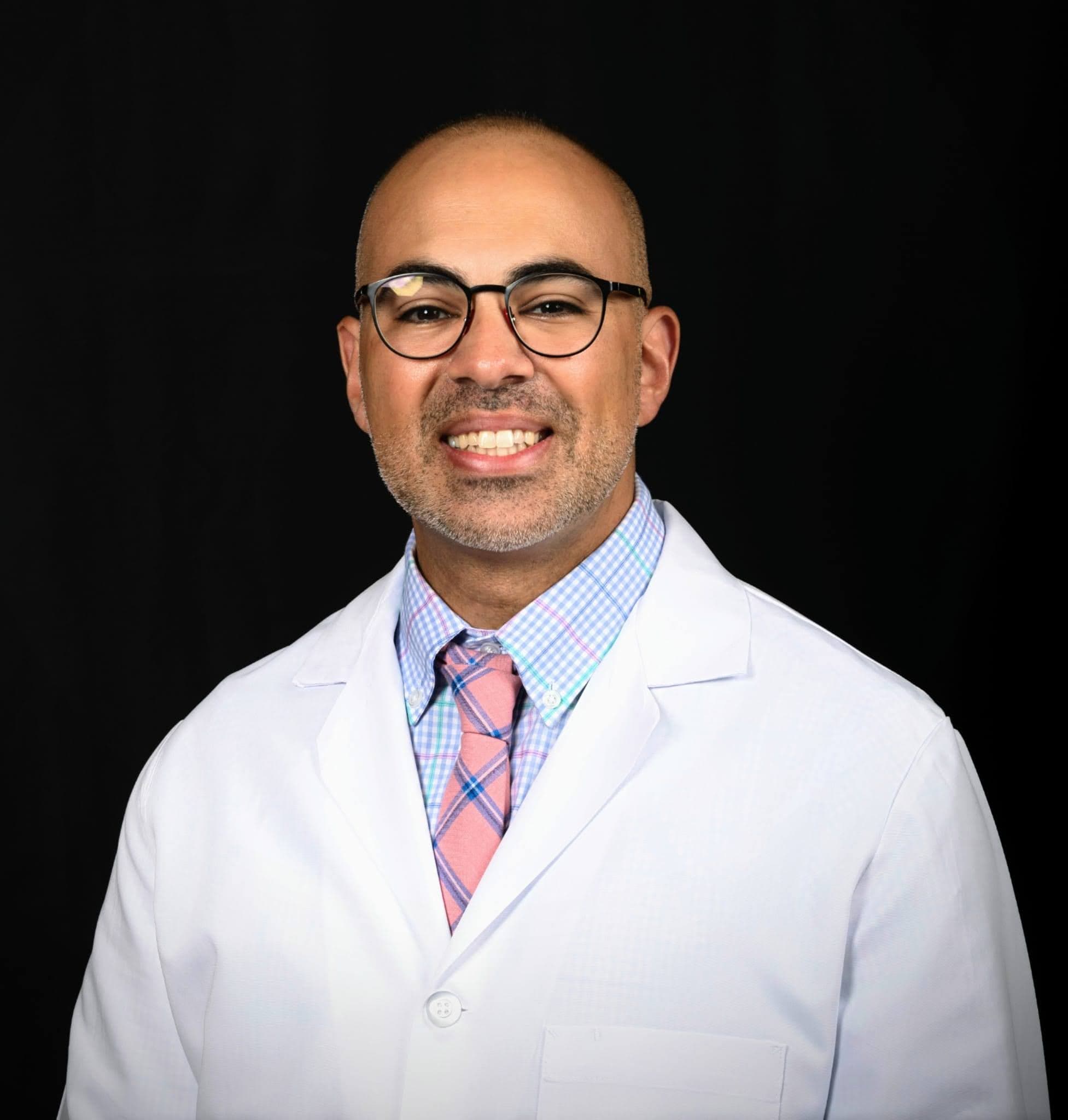
Ahmed Sabbah, DDS, PhD
Dr. Sabbah is a Clinical Assistant Professor at the UT Health San Antonio School of Dentistry (UTHSA). He earned his DDS and PhD before completing a 2-year Advanced Education in General Dentistry (AEGD) residency at UTHSA in 2015. From 2015 to 2019, he served as a General Practice Group (GPG) leader, during which he spearheaded the transition from paper-based to electronic student evaluations by developing a web application for student assessment. Supported by several grants, the application has been fully integrated into the predoctoral clinic since 2017.
Dr. Sabbah has received multiple awards, including Professor of the Year, selected by senior dental students, and the Excellence in Clinical Teaching Award. In 2019, he became Assistant Director of the AEGD program, where he implemented digital workflows. Since June 2020, he has served as Program Director of the AEGD residency. His accomplishments in this role include expanding the program to 19 residents, launching the AEGD Master’s program, establishing a partnership with 7 to 7 Dental & Orthodontics, initiating digital workflows at Haven for Hope, and piloting digital systems across the dental school.
Dr. Sabbah has presented at numerous national meetings and served as chair of the Section on Comprehensive Dentistry for the ADEA. He has published several papers and was the principal investigator on a $1.4 million federal grant. His research focuses on implant survival in HIV patients, competency assessment, and the use of ceramic-infiltrated printed resin for indirect restorations.
Disclosures
Commercial Disclosure
This free Dental Learning presentation is made possible through the continued support of Oral Arts Dental Laboratory. Ahmed Sabbah, DDS, PhD is a consultant and/or speaker for the following companies and/or organizations: Dental Learning, Oral Arts Dental Laboratory. Ahmed Sabbah, DDS, PhD may receive an honorarium as compensation from the CE Supporter of this presentation and/or from Dental Learning for the time involved in preparing and delivering this online presentation.
Dental Learning is an approved AGD PACE Provider and California State Dental Board Provider of dental continuing education. Dental Learning strives to deliver balanced, objective and clinically relevant information grounded on scientific research. Lecturers who are invited to deliver Dental Learning CE webinars are advised to substantiate their claims with research-supported data and to disclose all commitments to, or relationships with, any commercial entity within the dental industry. In many cases, lecturers are sponsored by a dental manufacturing company, which provides them with support in the form of honorarium and/or dental products and equipment in order to help with clinical presentations. Prior to each live CE webinar, lecturers are made aware of the importance of delivering their presentations without commercial bias, and where appropriate, to mention a variety of different product choices that may be relevant to the subject matter of the lecture, for the educational benefit of the participant.
Disclaimer
Dental Learning LLC sites offer content that include opinions, techniques, recommendations, etc. from a variety of writers and speakers that are not necessarily endorsed by Dental Learning LLC, its associates and sponsored Dental Affiliates. Viewers are responsible for verifying the validity, accuracy and relevance of all content before implementing any techniques, products or recommendations into their clinical setting. Viewers understand that Dental Learning LLC, its associates, writers, speakers and sponsored Dental Learning Affiliates are not in any way responsible or liable for any adverse events that may occur (i.e., in a clinical setting or anywhere) based on any information disseminated from Dental Learning LLC sites, including all Dental Learning sites.
The copyrights and other rights to the slides and video contained in a webinar posted on this website are owned by the speaker, Dental Learning LLC, and/or the sponsor company and/or its subsidiaries worldwide. Viewers are only authorized to view the content of the webinar (live and archive) at this Website and are not permitted to screen capture, record and/or download any content displayed in this webinar. You may not make any part of this Website available as part of another web site whether by hyperlink framing on the Internet or otherwise.
By signing up for this webinar/event or podcast, I agree to receive electronic messages, which may include educational events, promotions, product information and service offers, from Dental Learning or any of its course supporters. I understand that I may unsubscribe at any time using the opt-out link provided in every message.
Dental Learning is an approved AGD PACE and California State Dental Board Provider of dental continuing education.
Questions regarding our Conditions of Usage, Privacy Policy, or other policy related material can be directed to our support staff by clicking on the "Support" link or you can email us at: support@dentallearning.net.